ADA Compliance Los Angeles Contractor
If you own or operate a commercial property in Los Angeles, you know that ADA compliance is more than just something to check off. It’s the law and a smart business choice.
What You Should Know About ADA Compliance In Los Angeles
The American with Disabilities Act (ADA) is a federal law that aims to provide equal access for individuals with disabilities. In Los Angeles, ADA compliance typically exceeds the federal regulations, thanks to California’s more rigorous accessibility laws, as well as on-going inspections.
Most businesses fall under Title III of the ADA. This applies to public accommodations, like retail stores, restaurants, medical offices, hotels and parking structures, as well as office buildings that are open for public business.
If your business has customers, clients or tenants, then you have to comply with ADA regulations.
The Importance of ADA Compliance for Los Angeles Companies
Los Angeles is one of the top regions in the country for ADA compliance enforcement and accessibility litigation. Non-compliance can lead to:
-
Costly fines and legal settlements
-
Forced renovations on short timelines
-
Business reputation damage
-
Loss of public and customer trust
ADA-compliant facilities are designed to be used by everyone and are generally safer and highly marketable for your tenants and their guests.
Typical Areas where Properties Fall Short of ADA Compliance in Los Angeles
Most ADA violations in Los Angeles are not malicious. They are usually discovered during routine inspections, or in response to complaints. These are the most common issues:
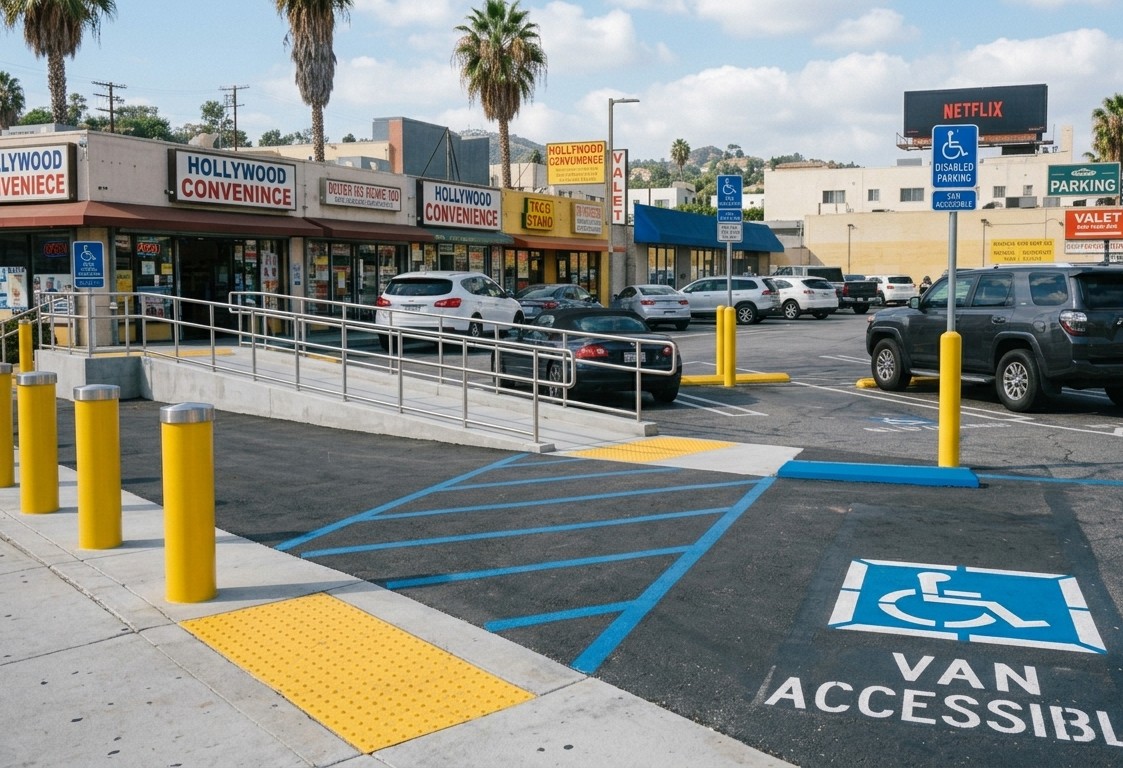
ADA Parking Lot Compliance
ADA enforcement focuses on parking lots more than anything else. Requirements include:
-
Correct stall and access aisle widths
-
Van-accessible parking with vertical clearance
-
Clearly visible ADA signage
-
Slopes that meet accessibility limits
Accessible Routes and Sidewalks
-
Sloped access and textured warning surfaces on curb ramps
-
Uninterrupted accessible routes from parking to entrances
Entrances and Interior Access
-
Minimum standard sizes of doorways
-
Lever-style door handles
-
Space clearance for people using mobility devices
-
Accessible restrooms and service counters
Los Angeles–Specific ADA Compliance Considerations
What sets ADA accessibility Los Angeles apart is that federal ADA standards coexist under California state disability access laws, which can be more rigorous. Local factors include:
-
High incidences of enforcement offences in commercial areas
-
Regular changes of property leading to enforcement scrutinies
-
Older buildings requiring accessibility upgrades
-
Mixed use developments with common access areas
For this reason, countless Los Angeles building owners prefer to work with experts who are well-versed in federal and state accessibility codes.
How to maintain your ADA-compliant facility in Los Angeles
Maintaining your ADA compliancy doesn’t have to be overwhelming. Remaining proactive rather than reactive to complaints and fines saves you from many unnecessary headaches.
Schedule an ADA Compliance Assessment
A site assessment by a trained professional can detect existing violations before they become legal complexities.
Prioritize High-Risk Areas
Establish and maintain litter control in parking lots, entrances, sidewalks, and bathrooms as these areas are mostly checked.
Keep Up With Maintenance
Nothing can send a compliant facility into non-compliance faster than faded striping, cracked pavement or damaged signs. Make sure your parking lot striping, painting and signage are up to date and clearly visible.
Document Your Efforts
Maintaining records of inspections, repairs and upgrades helps to show good faith compliance, if challenges emerge.
ADA Compliance Is an Investment, Not Just a Requirement
Though some business owners see following ADA guidelines as an expense, it’s really an investment in accessibility, safety and long-term minimizing of risk. In a cosmopolitan city such as Los Angeles, inclusive businesses appeal to a broader consumer base.
An ADA-compliant property:
-
Welcomes more customers
-
Reduces legal exposure
-
Improves overall property value
-
Aligns with modern urban standards
Doing ADA Compliance Los Angeles Right.
In Los Angeles, ADA compliance isn’t just a way to avoid penalties; it’s about making spaces that serve everyone. Los Angeles-based business owners can maintain compliance with ease and increase accessibility for everyone in the process, by learning about local requirements and working to efficiently cover most of the usual problem areas that older construction presents, while also staying vigilant about inspections and ongoing maintenance.
If you are responsible for or own a commercial property in Los Angeles, it’s prudent to review your ADA compliances and take steps today before any small problems create big headaches tomorrow.
Not sure if your business is ADA-compliant? Give us a call today for a free estimate.