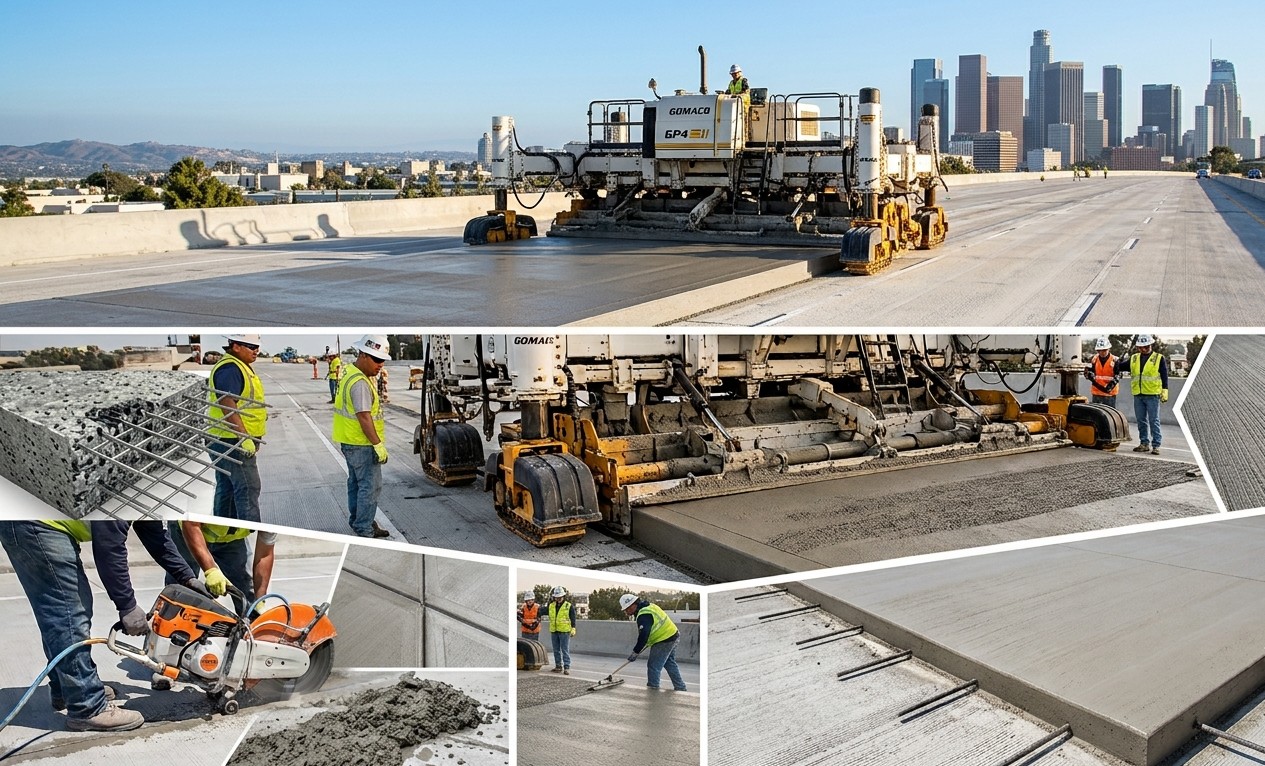
Highway Concrete Paving Contractor in Los Angeles
Los Angeles runs on its highways. From early morning 405 commutes, to late night freight traffic moving through the Port of LA, our roads get hit hard every day. Which is one of the reasons why choosing a highway concrete paving contractor isn’t just a construction decision, it’s an investment in safety and durability and long-term performance.
Learn how to find a trusted, quality highway concrete paving contractor in Los Angeles but also explore why concrete is frequently the choice material for major roads and what types œities and developers charged with managing a paving project should be vigilant about.
Why L.A.’s Highways Will Always Be Built of Concrete
Highways in Southern California present special problems -- the brilliant sun, heavy loads of trucks and buses, seismic forethoughts as well as volumes of traffic. Concrete pavers work great in these applications.
Compared to asphalt, highway concrete pavement provides:
-
Longer life (typically 30-40 years)
-
Lower long-term maintenance costs
-
Better reflectivity makes you more noticeable when the sun goes down
For Los Angeles freeways and arterial streets, concrete just lasts longer over the decades. And in high-stress areas like on-ramps, interchanges and truck corridors, even more so.
What Exactly Does a Highway Concrete Paving Contractor Do
An expert highway concrete paving contractor does more than simply pour a slab of cement. These kinds of projects call for precision, foiled-coordinated and deep technical skill.
Typical services include:
-
Highway and freeway concrete paving
-
Slip-form paving (or extrusion) of long lengths of pavement.
-
Pavement rehabilitation and replacement
-
Shoulder, barrier and median concrete work
-
Layouts of joints, positions for dowels, and surface texture
In Los Angeles, these are often fast-track projects with night work, lane closures and stringent safety demands, so experience is absolutely paramount.
Slipform Concrete Paving: It’s a Necessity for Big Highway Jobs
Most of contemporary LA’s freeways are constructed with slipform concrete paving, a very fast process in which concrete is poured and formed by dedicated machines.
Benefits of slipform paving include:
-
Smooth, uniform pavement surfaces
-
Faster production rates
-
Consistent thickness and alignment
-
Lower labor costs on big jobs
When considering a highway or freeway concrete paving company, slipform capabilities are a must for not only for freeway lanes but also HOV Lanes and express corridors.
Local Experience Counts
Not all paving contractors have the capabilities to manage the complexity of regulations and logistics that come with Los Angeles highway projects. A contractor who is familiar with the area knows:
-
Caltrans specifications and inspection processes
-
City and county permitting requirements
-
Planning and design for traffic control in urban areas of high density
-
Environmental and sustainability regulations
Local familiarity can prevent expensive delays and facilitate better working relationships with engineers, inspectors, and transportation authorities.
Essential Characteristics of An Ideal Highway Concrete Paving Contractor
When you compare contractors, don’t just look at the price. The best highway concrete paving contractors in Los Angeles typically offer:
Self-Performing Capabilities
When a contractor chooses to self-perform their paving, they assume better control over the quality, scheduling and safety.
On-Site or Portable Batch Plants
Batching at the site for the concrete on-site improves uniformity and ensures adequate quality control, which are important requirements for highway RCC pavement mixes.
Modern Paving Equipment
The use of modern slipform pavers, stringless technology and grade control technologies were considered contributory factors to better long term pavement performance.
Proven Highway Project Portfolio
Simply search for projects with experience in highways, freeways, airport pavements or major transportation routes.
Strong Safety Record
Highways construction sites are high risk job site. You want to make sure that the contractor you choose has a long history of preserving the safey and well-being of their workers and the public.
Common Highway Concrete Projects in Los Angeles
A proficient highway concrete paving company might participate in:
-
Freeway lane replacements and widenings
-
Development of travel lanes (express and HOV)
-
Ramp reconstruction and interchange upgrades
-
Truck route pavement upgrades
-
Access roads and industrial corridors to airports
As LA’s commitment to building transportation infrastructure advances, the need for high quality concrete pavement continues.
Cost vs. Value: Long-Term Thinking
The lifecycle cost of concrete highways can be more expensive up front than their asphalt counterparts, but in Los Angeles, that calculus is not always the case. All of that reduced maintenance, diminished down time and longer lifespan translates into actual savings — especially on heavily traveled routes where constant repairs affect the lives of tens of millions of drivers.
A good highway concrete paving contractor can assist owners in assessing total cost of ownership, rather than just the first cost of construction.
Choosing the Right Partner for Your Highway Project
You’re a public agency, civil engineer or infrastructure developer making the decision to choose the right highway concrete paving contractor can determine the success of your project – or put you in worry about it. Focus on value — experience, technical capability and local understanding — not just low bids.
And in a sprawling, fast-moving metropolis like Los Angeles, well-built concrete highways aren’t simply infrastructure — they’re the city’s circulatory system.