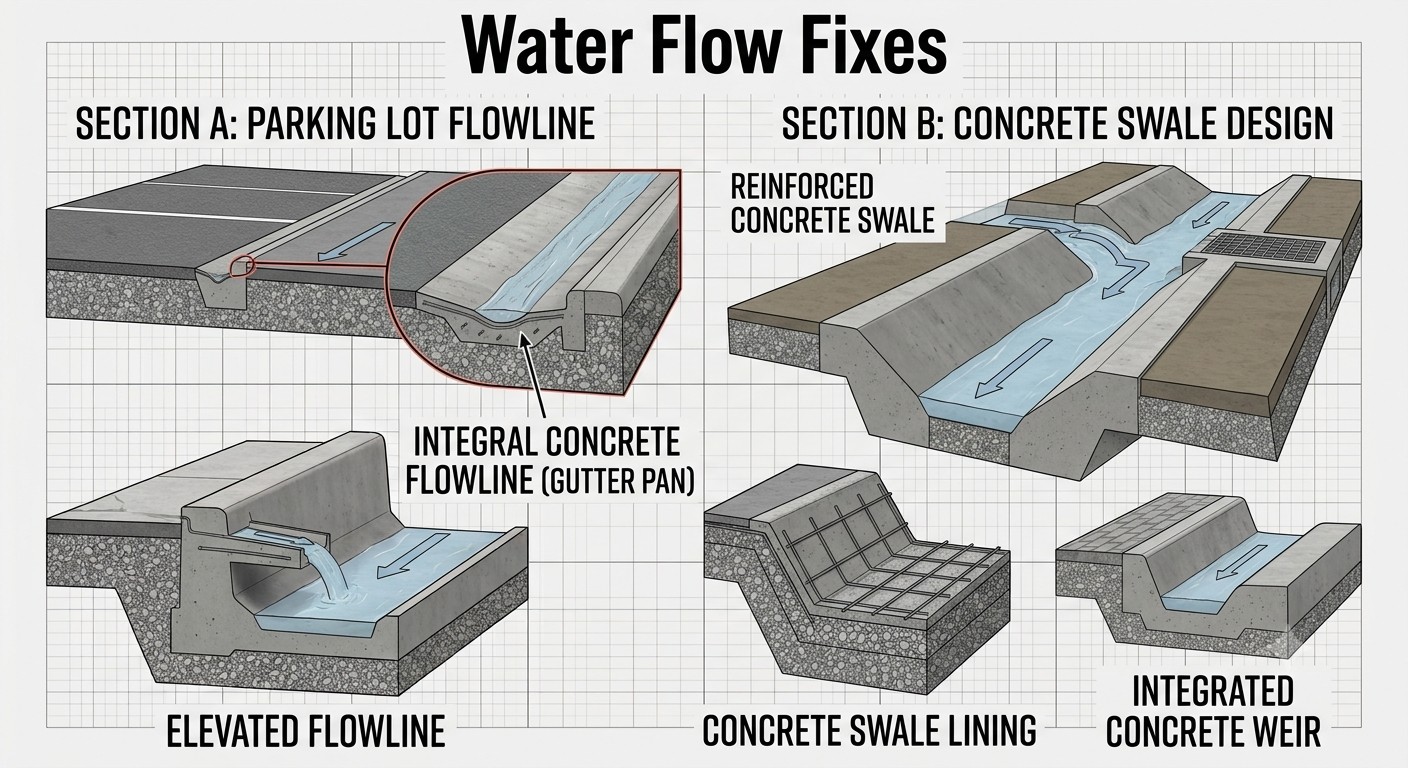
Water Flow Fixes with Concrete Flowlines & Swales in Los Angeles
Living in Los Angeles, we tend not to think about rain and water, since it’s so dry. However, water is one of the most destructive forces on Earth and let’s face it, when we get rain, we really get rain. From winter downpours to over-irrigation and hillside runoff, subpar drainage can quietly wreck concrete, asphalt or surrounding structures. That’s when water flow, corrections with concrete flowlines and swales work.
Constructed to channel surface water securely and effectively, concrete flowlines and swales are a trusted drainage choice for homes, businesses, and local governments here in Southern California. If you have standing water or erosion issues, learning how these systems work will help you protect your property.
Why the Water Flows Badly in Los Angeles
Los Angeles has a drainage issue. Long dry spells bake soil and when the rain finally does come, water rushes through it. Add the natural obstacle of sloped terrain, aging pavement, and dense development, and you’ll find that runoff quickly becomes a headache.
Common local drainage issues include:
-
Water pooling on parking lots and driving lanes
-
Runoff draining towards a building or foundation
-
Erosion at the edge of pavement or landscaped area
-
Early cracking or settlement of concrete and asphalt
Simply ignoring these issues seriously impacts more than how much curb appeal a property has. It reduces the life of pavement and can result in expensive repairs.
What Are Concrete Flowlines?
Reinforced concrete flowlines are placed at hydraulic low points to route sheet water. Think of them as waterways that direct water where you want it, but without the complexity of underground pipes or mechanical systems. If you’ve ever driven by the California Aqueduct, flowlines are like that.
They’re commonly installed:
-
In parking lots or drive aisles
-
Between pavement and landscaped areas
-
In steeply sloped areas
In Los Angeles, concrete flowlines are favored for being durable and easy to clean, not to mention highly effective at handling sudden rainfall.
Concrete Swales for Drainage Management
Concrete swales are like flowlines, but are wider and shallower. A swale is a low-lying depression or hole that carries water using gravity from a higher elevation to its intended destination, such as a drain or catch basin.
Concrete swales are the perfect solution for more high traffic or commercial areas. They’re often used in:
-
Commercial developments
-
Industrial yards
-
HOA communities
-
Public infrastructure projects
Swales made of concrete will never wear out, regardless of weather or foot traffic and are a resilient water runoff solution.
How Concrete Flowlines and Swales Solve Drainage Problems
Directing Water Away from Pavement
Out of control water is the enemy of concrete and asphalt. Channeling, ruts and swales channel runoff, preventing it from spreading over paved surfaces.
Preventing Erosion
When water freely moves over soil or pavement edges, it causes erosion. Erosion causes soil to move, damaging concrete. By controlling water in a non-erosive manner, you can protect your concrete surfaces.
Reducing Long-Term Maintenance Costs
Water results in cracking, potholes and failure to the base. Proper drainage installation upfront saves you recurring costs of repair and it prolongs pavement life, a critical concern considering how much it costs to replace concrete in Los Angeles.
Supporting Local Stormwater Systems
When appropriate, you can connect your flowline and swale system to pre-existing storm drains or catch basins on your property, ensuring it complies with local drainage laws.
When These Drainage Solutions Are Ideal
Concrete flowlines and swales are flexible design solutions that adapt to a variety of building types throughout Los Angeles:
-
Car Parks: Remove ponding and increase safety for vehicles
-
Commercial Properties: Protect buildings and walkways from runoff
-
Housing Developments: Manage shared or hillside drainage areas.”
-
Industrial Facilities: Control heavy flow with no erosion
Through proper design that takes into account slope, water volume and connections to downspouts, a rain garden can be designed so that storm water flows through it frequently enough to prevent backups.
Elements to Consider when Designing a Water System in Los Angeles
There are no magic fixes for effective water flow. It all depends upon thoughtful design. Some considerations in Southern California include:
-
Slope and pitch: Enough fall to move water without causing erosion
-
Width and thickness: Commonly 12 to 24 inches wide, reinforced with steel
-
Integration: Tying into curbs, gutters, and storm drains
-
Local codes: Compliance with city and county drainage standards
In Los Angeles, the rain doesn’t fall very often, but when it does, it pours.
Advantages of Picking Concrete Over Other Options for Drainage
Concrete flowlines and swales have a number of benefits over gravel channels or underground piping:
-
Long lifespan with minimal maintenance
-
Clean, professional appearance
-
It stands up to car traffic and weather
-
Predictable water flow performance
For homeowners who desire long-term solutions, not just quick fixes, a concrete drainage system is an excellent choice.
Correct Water Flow Before It Causes Bigger Headaches
In Los Angeles, water doesn’t need to fall frequently to lead to serious problems. It only takes one heavy storm and poor drainage to cause significant damage. Concrete swales and flowlines are an affordable, established method of managing runoff, while protecting pavement and maintaining properties year-round.
If look out at your property and see areas of standing water that are running down slopes without your say-so, solve it now with the proper drainage system to prevent having to fix a bigger problem in the long run.